



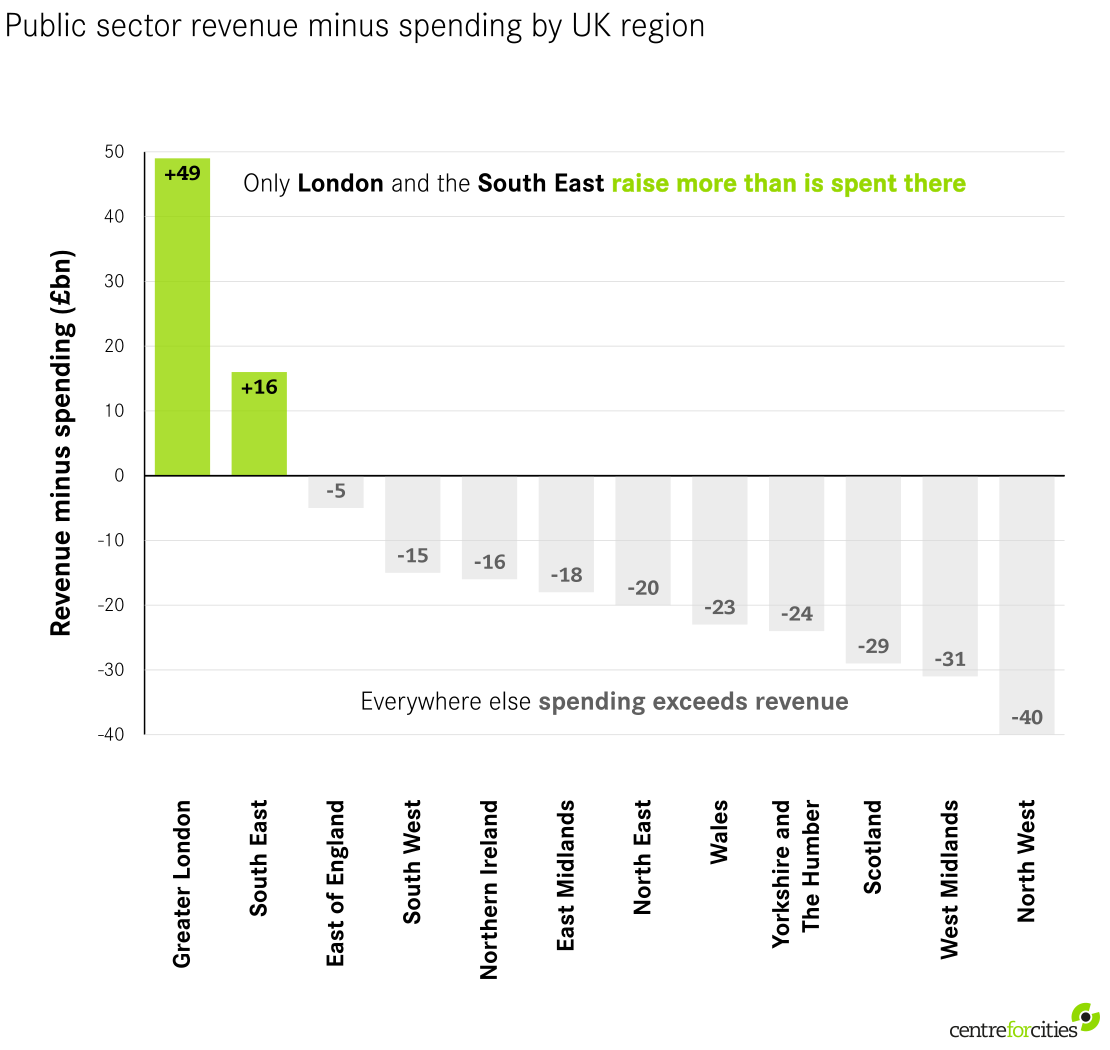
The big picture: The UK’s fiscal geography is uneven, with some places raising much more tax than others. The average Londoner pays nearly four times more income tax than the average person living in the West Midlands.
Why it matters: This creates a challenge for fiscal devolution. Giving every mayor the same share of income tax would provide very different amounts of funding in different places.
By the numbers: If mayors retain 1% of locally raised income tax, London would keep £860 million a year, compared with £74 million in the West Midlands. That is £92 per resident in London and only £23 in the West Midlands.
Yes, but: The share of tax that mayors retain should be varied to account for different tax bases. London should retain a smaller share of its tax revenue compared to MSAs.
The bottom line: Fiscal devolution can be designed to maximise growth in London and the rest of the country, while providing a fair level of funding for mayors and central government.
Source and methodology: The Sub-UK Public Sector Finances and Research team (2026) Country and regional public sector finances net fiscal balance tables, ONS; HM Revenue & Customs (2026) Table 3.14a Income and tax by borough and district or unitary authority, confidence intervals, GOV.UK; Annual Population Survey (2026) Annual population survey (Dec 2004 to Mar 2026), NOMIS.
Go deeper: Read our previous work Fiscal devolution for England; Fiscal devolution for London; Fiscal devolution unlocks infrastructure investment, and register to the launch event of our next briefing in the series Adding up: What fiscal devolution will mean for England’s mayors.
One chart. Five takeaways. Every Tuesday.